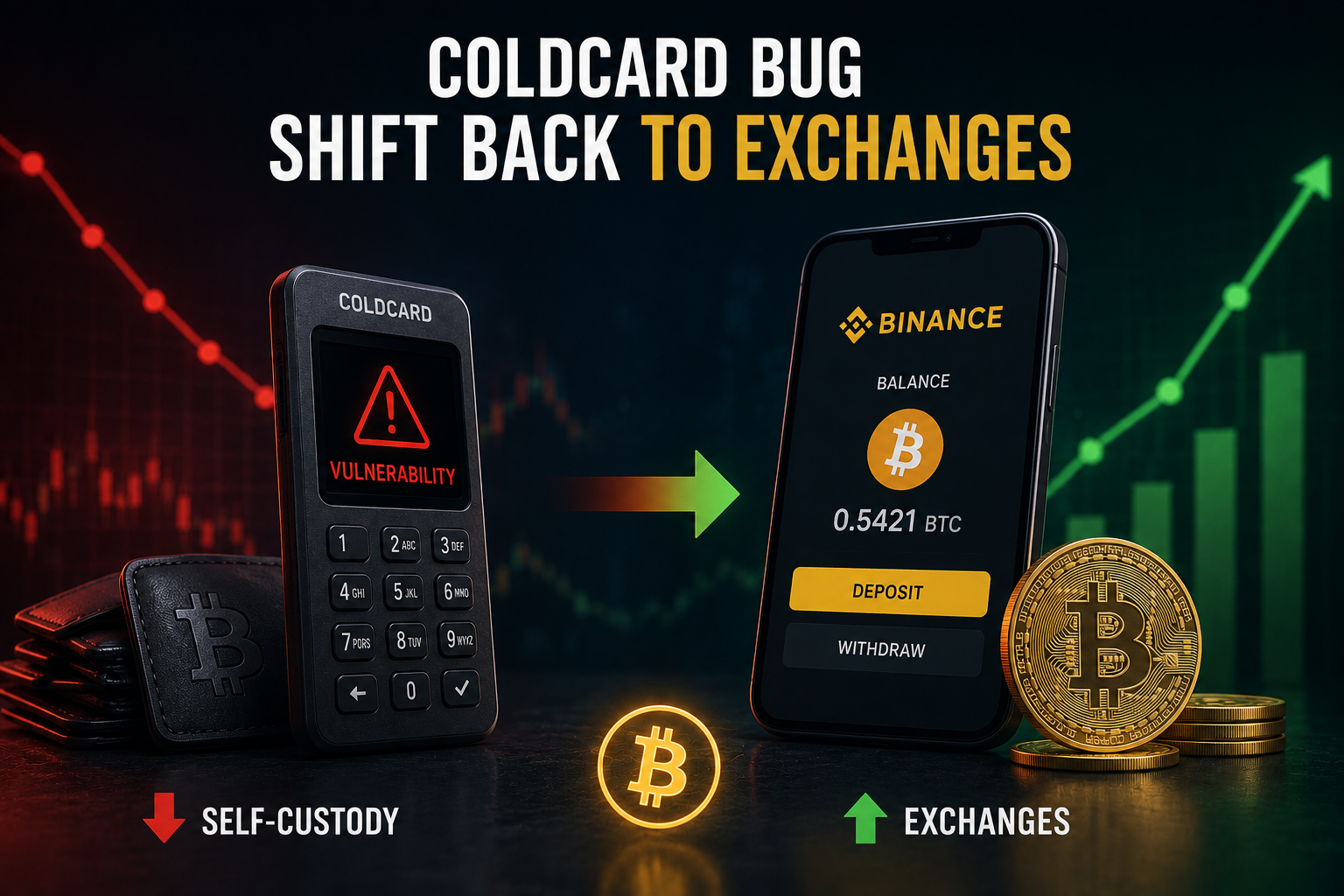
A recent vulnerability tied to Coldcard has prompted some smaller bitcoin holders to move their funds back onto exchanges, according to blockchain analytics firms cited by CoinDesk. The pattern stands out because it runs counter to the behavior seen after the FTX collapse in late 2022, when many investors pulled assets off trading venues and into self-custody.
Coldcard is widely known in bitcoin circles as a hardware wallet brand, and the reported exploit appears to have unsettled a segment of users who had previously favored keeping coins in private wallets. Rather than doubling down on self-custody after a security scare, some holders are choosing the perceived operational simplicity of exchanges, even if that means accepting a different set of risks.
The move suggests that security events do not always lead to the same market response. In the wake of FTX, the dominant reaction was a broad loss of trust in centralized intermediaries. This time, however, the specific nature of the Coldcard vulnerability appears to be influencing behavior differently, at least among smaller holders. The available information indicates the shift is being observed by analytics firms, though the full scale of the movement is not clear from the data provided.
That distinction matters for market structure. Exchange balances can rise when investors return coins to trading platforms, which may reflect a willingness to trade or simply a desire for convenience after a security concern. At the same time, such flows do not necessarily imply a broader change in sentiment across the market. The source material points only to smaller bitcoin holders and does not indicate a wider reaccumulation trend or a major change in overall liquidity conditions.
For bitcoin investors, the episode underscores a recurring tension between convenience and control. Self-custody reduces reliance on third parties, but it also places responsibility for security on the holder. Centralized exchanges can be easier to use, but they introduce custodial and counterparty risk. The Coldcard-related move back to exchanges shows how quickly some users may recalibrate when a hardware wallet issue becomes public.
The broader takeaway is limited but notable: security incidents can push capital in opposite directions depending on where trust breaks down. Following FTX, trust in an exchange was the problem. In the Coldcard case, the concern appears to involve the wallet itself, and that has led some users to favor a different custody model. As with any isolated event, the longer-term effect on bitcoin storage habits remains uncertain.
Project Visibility on ChainBrief
Sponsored coverage and project placements for Web3 teams.