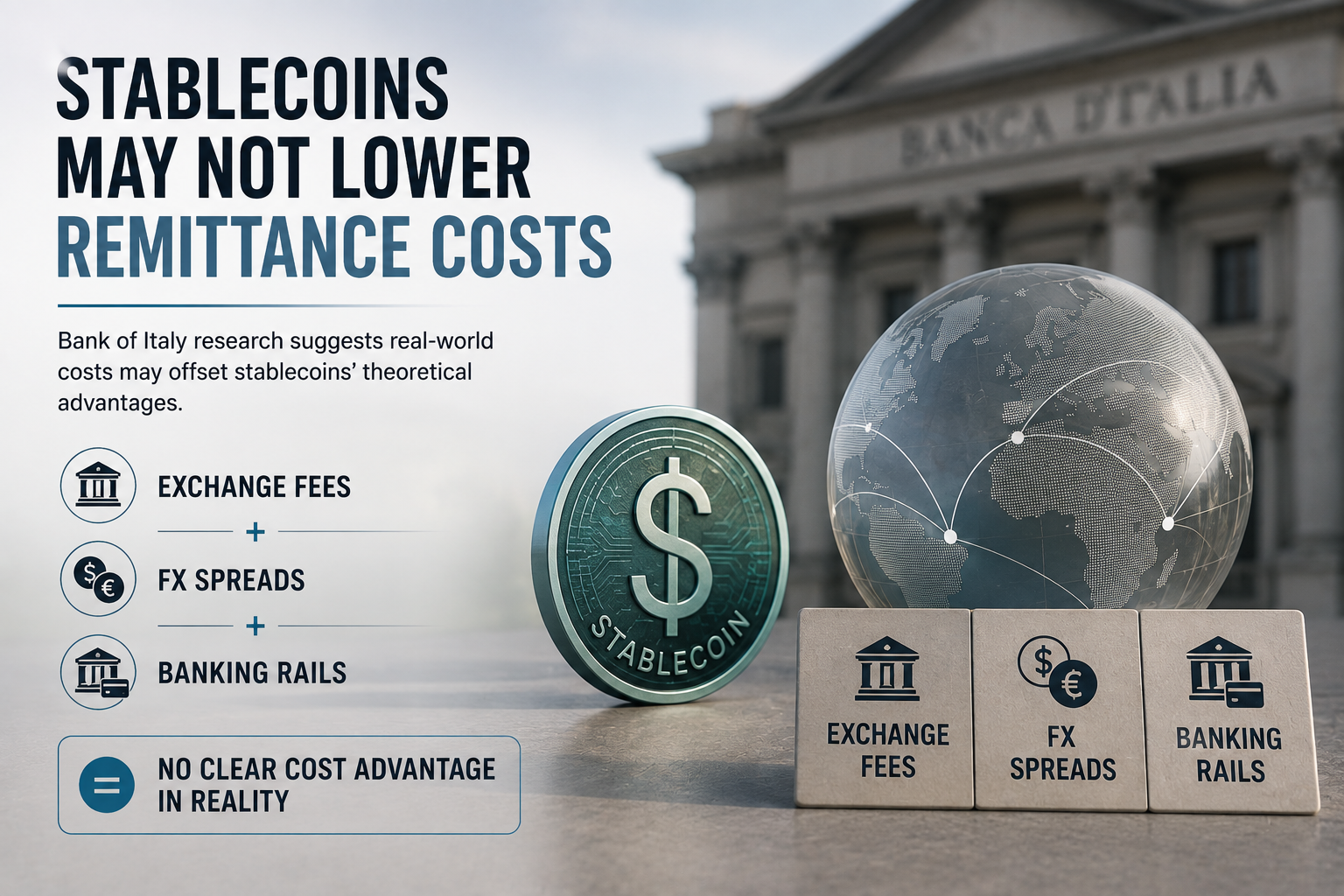
A Bank of Italy research note is adding nuance to one of crypto’s most common use cases: cross-border payments. According to the study, stablecoin-based remittances are not automatically cheaper than traditional transfer methods once the full set of costs is taken into account.
The research used a mystery-shopping experiment to compare remittance routes and found that exchange fees, foreign-exchange spreads and banking rails can offset any advantage stablecoins might offer on paper. The result suggests that headline claims about low-cost blockchain payments may not hold up in real-world transactions, especially when users need to move money between fiat and digital assets.
Stablecoins have often been promoted as a faster and lower-cost way to send money across borders, particularly for migrant workers and other users in markets where remittance fees can be high. But the Bank of Italy’s findings indicate that the economics depend heavily on how the transfer is executed. If users must pay to acquire stablecoins, convert them back into local currency, or rely on intermediaries with their own spreads and fees, the total cost may end up close to, or no better than, conventional rails.
The study’s implications are important for a sector that has repeatedly positioned stablecoins as a practical payments tool rather than just a trading venue. For policymakers and financial institutions, the research underscores that efficiency claims should be tested against the entire transaction chain, not just the blockchain settlement layer.
The findings do not rule out stablecoins as a useful remittance instrument. They do, however, suggest that lower settlement costs alone are not enough to guarantee cheaper end-to-end transfers. The actual experience can vary by corridor, provider and local market structure, and those variables can materially change the final price paid by consumers.
For crypto markets, the report is a reminder that adoption narratives often run ahead of implementation details. Stablecoins may still play a role in payments, but their competitive edge appears more conditional than many of their advocates have argued.
Source: CoinDesk, citing Bank of Italy research.
Project Visibility on ChainBrief
Sponsored coverage and project placements for Web3 teams.