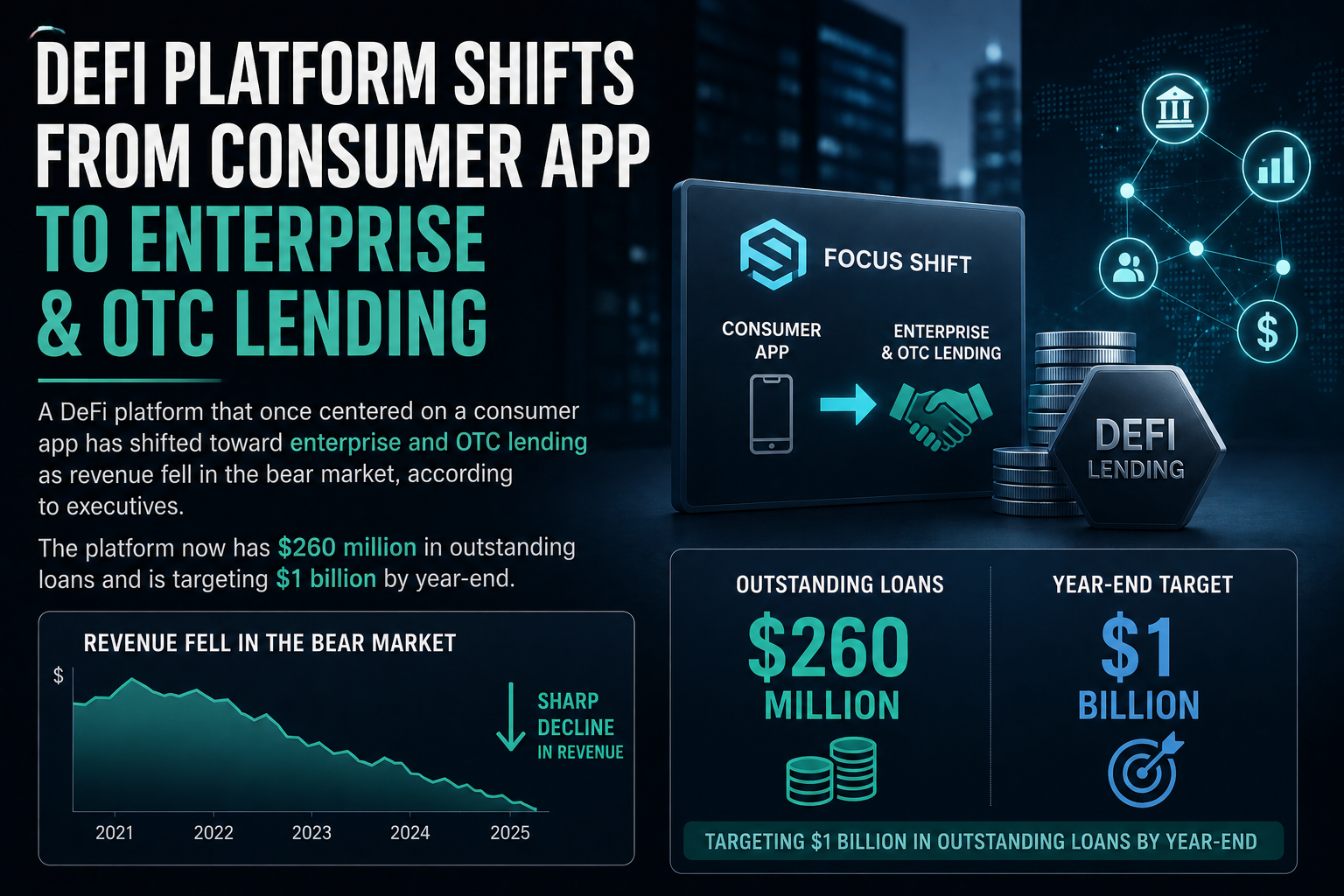
A DeFi platform that once focused on a consumer-facing app has pivoted toward a quieter role behind the scenes, serving as infrastructure for larger technology firms as market conditions reshaped its business.
According to CoinDesk, the company saw revenue decline from $80 million to $20 million during the bear market, underscoring how sharply demand weakened for its original consumer product. Rather than continue chasing the retail market, the firm has leaned into a backend strategy that appears to be gaining traction with institutional and corporate clients.
The fastest-growing segment is over-the-counter lending, which currently has $260 million in outstanding loans. Management is targeting $1 billion in outstanding OTC lending by year-end, a goal that suggests the platform expects the institutional side of the business to scale materially faster than its earlier consumer offering.
The shift reflects a broader pattern across crypto: during periods of weaker retail activity, some firms have moved away from public-facing products and toward infrastructure, liquidity, and credit services that can be embedded into other businesses. In this case, the platform’s new role is described as a backend provider for tech giants, though the available information does not specify which companies are involved.
That repositioning may help explain why the firm has changed course. Consumer apps can be highly sensitive to market sentiment, usage cycles, and competitive pressure, while lending and embedded financial services can generate steadier demand if counterparties keep deploying capital. Still, the business remains exposed to credit risk and to the broader health of the digital-asset market.
The revenue drop from $80 million to $20 million highlights the scale of the contraction the company faced in the bear market. At the same time, the growth in OTC lending suggests the platform has found a more durable segment, even if the path to the $1 billion target remains uncertain.
CoinDesk reported the development on Aug. 2. With limited details available, the company’s transition appears less like a retreat from DeFi than a shift in where it expects the strongest demand to come from: not from end users, but from larger financial and technology businesses that prefer to access crypto services indirectly.
Project Visibility on ChainBrief
Sponsored coverage and project placements for Web3 teams.