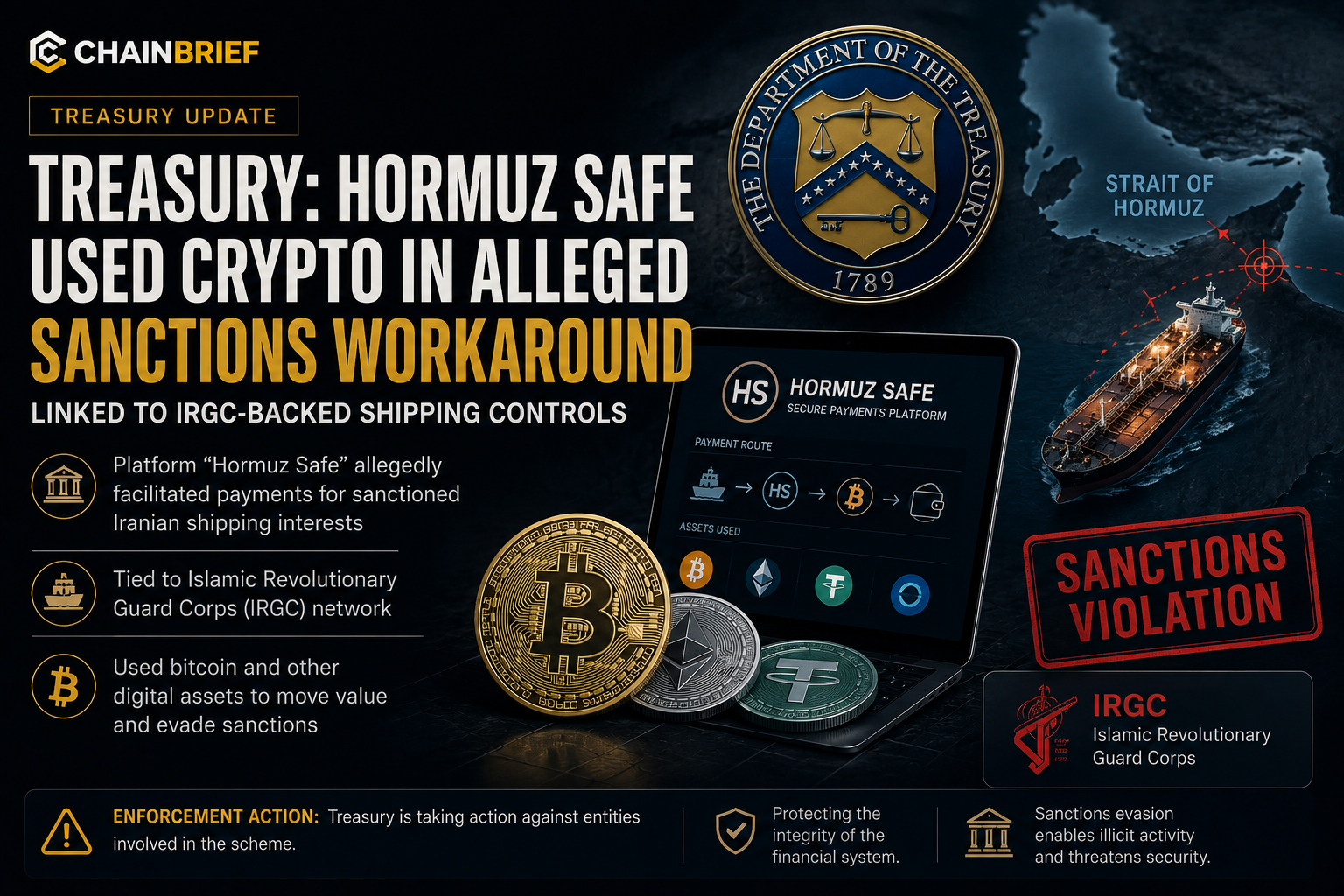
The U.S. Treasury Department has sanctioned what it described as an Iran-linked bitcoin insurance scheme tied to shipping through the Strait of Hormuz, highlighting a new case where digital assets were reportedly used in an alleged sanctions workaround.
According to the department, a platform called Hormuz Safe accepted bitcoin and other digital assets as part of a broader arrangement linked to shipping controls backed by Iran’s Islamic Revolutionary Guard Corps, or IRGC. Treasury said the structure was used to support vessels operating in the strategically important waterway, though it did not provide additional operational detail in the material reviewed.
The action adds to Washington’s efforts to disrupt networks that it says help Iran move value outside the traditional banking system. The Strait of Hormuz remains one of the world’s most closely watched shipping chokepoints, making any enforcement action tied to the corridor a potential concern for trade and logistics markets as well as sanctions compliance teams.
The case also underscores how cryptocurrencies can surface in cross-border payment schemes where access to conventional rails is limited or heavily monitored. While digital assets are often described as tools for fast settlement or treasury management, regulators frequently point to the same features as risks when they are used in transactions that may obscure counterparties or payment flows.
Treasury’s statement did not indicate whether the sanctioned platform was primarily used for insurance, freight protection, or another maritime service, and the extent of any commercial activity remains unclear from the available information. The source material also does not identify which digital assets beyond bitcoin were involved.
For crypto markets, the immediate significance is more regulatory than price-driven. The move is another reminder that U.S. authorities continue to scrutinize blockchain-based payment activity in sanctions-sensitive jurisdictions, particularly where the systems intersect with shipping, energy, or state-linked actors.
CoinDesk reported the Treasury action on Friday, citing the department’s description of the alleged scheme. Further details from U.S. authorities or from parties named in the designation were not available in the source material reviewed.
As with other sanctions cases involving digital assets, the broader question is how enforcement agencies will interpret the role of crypto intermediaries, payment processors, and wallet infrastructure when tokens are used in arrangements that may be designed to bypass standard financial controls. For now, Treasury’s move appears aimed at signaling that such activity will remain within scope of U.S. sanctions enforcement.
Project Visibility on ChainBrief
Sponsored coverage and project placements for Web3 teams.