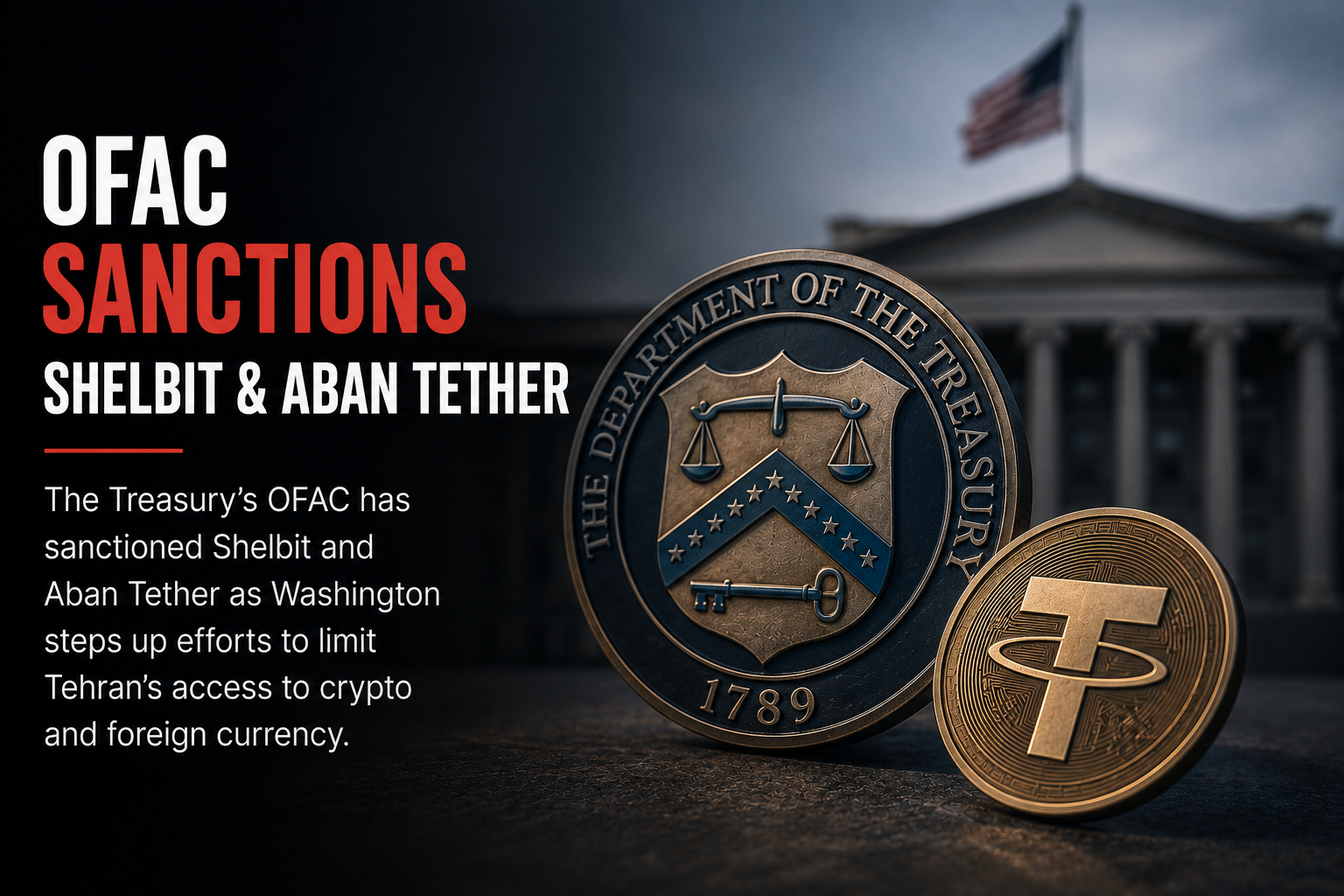
The U.S. has widened its campaign against Iran-linked crypto activity, with the Treasury Department’s Office of Foreign Assets Control sanctioning two exchanges, Shelbit and Aban Tether, according to CoinDesk.
The move adds to Washington’s broader effort to curb Tehran’s access to digital assets and foreign currency. The latest designations suggest U.S. authorities continue to view crypto rails as a potential channel for sanctioned actors seeking to move value outside the traditional financial system.
Details in the source material are limited, and it is not clear from the available information how the exchanges were used or what direct impact the sanctions may have on their operations. Still, the action underscores the U.S. government’s willingness to target platforms tied to jurisdictions it sees as sensitive from a sanctions-enforcement perspective.
OFAC sanctions generally restrict U.S. persons from dealing with designated entities and can complicate access to the broader financial system. In practice, that often means pressure on counterparties, service providers and any venues that may have exposure to the named firms. For crypto markets, such measures can also reinforce compliance obligations for exchanges that screen users and transaction flows for sanctions risk.
The decision comes as U.S. officials continue trying to limit Iran’s ability to use digital assets alongside other financial channels. Crypto has increasingly become part of the sanctions discussion in Washington, especially where regulators suspect it may be used to bypass restrictions on cross-border payments or foreign exchange.
CoinDesk reported the sanctions action on Friday, citing the Treasury’s OFAC. No further operational details were included in the source material, and the practical effects on Shelbit and Aban Tether remain uncertain based on the information available.
For the market, the announcement is another reminder that sanctions enforcement remains a live regulatory risk across crypto infrastructure. It does not, on its own, indicate a broader market trend, but it may encourage exchanges and service providers to tighten compliance procedures around exposure to sanctioned regions and entities.