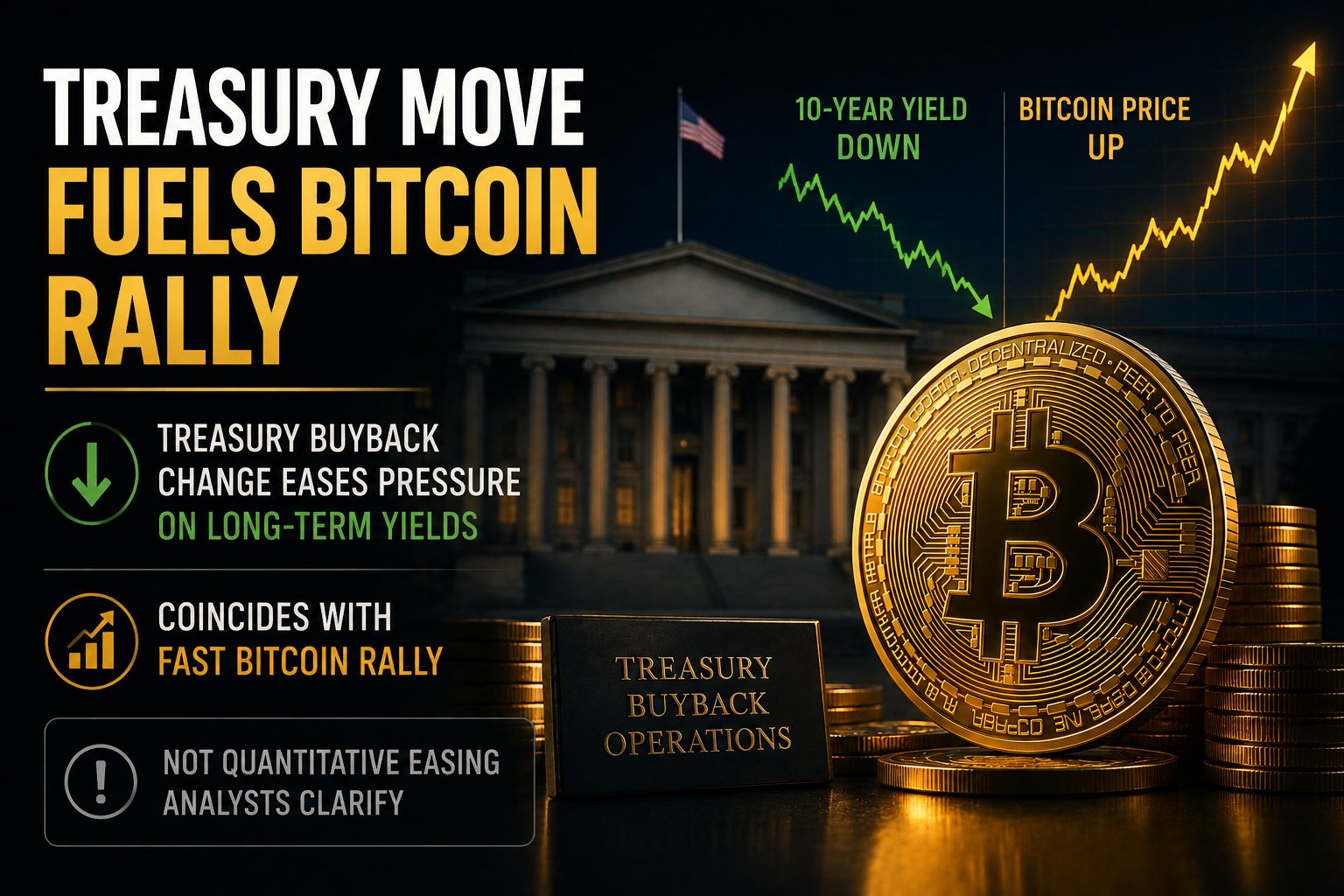
Bitcoin climbed roughly 25% in a matter of days, approaching $80,000, after a Treasury buyback adjustment helped push long-term U.S. yields down from 19-year highs and fueled an outsized short squeeze, according to CoinDesk.
Analysts quoted in the report said the move should not be described as quantitative easing. Even so, the timing mattered. Treasury buybacks can influence liquidity conditions at the margin, and in this case the shift appeared to relieve some pressure in markets that had been positioned for more downside risk.
That backdrop was important for bitcoin, which had entered the move with a notably bearish setup. When positioning leans too far in one direction, a sharp price move can force traders to close short bets quickly, amplifying gains. CoinDesk described the episode as a record short squeeze, suggesting that the rally was driven not only by macro relief but also by crowded positioning in the crypto market.
The rise in bitcoin also came as long-term Treasury yields moved off their recent highs. Lower yields can matter for risk assets by easing financial conditions and reducing the relative appeal of safer fixed-income returns. Still, the report stopped short of linking the rally to a broad shift in Federal Reserve policy or to a durable change in the macro outlook.
The episode underscores how sensitive bitcoin remains to changes in U.S. rates and liquidity expectations. Even a Treasury technical adjustment, rather than a formal policy easing, can ripple through markets when positioning is stretched and sentiment is already fragile.
For now, the move looks more like a momentum-driven repricing than a structural breakout. The CoinDesk report noted the yield move and short squeeze as the key ingredients behind the advance, but the longer-term significance will depend on whether Treasury market pressure continues to ease and whether speculative positioning resets.
As always, the latest price action may reflect a mix of macro catalysts and market mechanics rather than a single clear driver. Traders and investors should be careful about treating the rally as evidence of a new policy regime. The source report emphasized that Treasury buybacks are not QE, and the distinction remains important for how markets interpret the move.