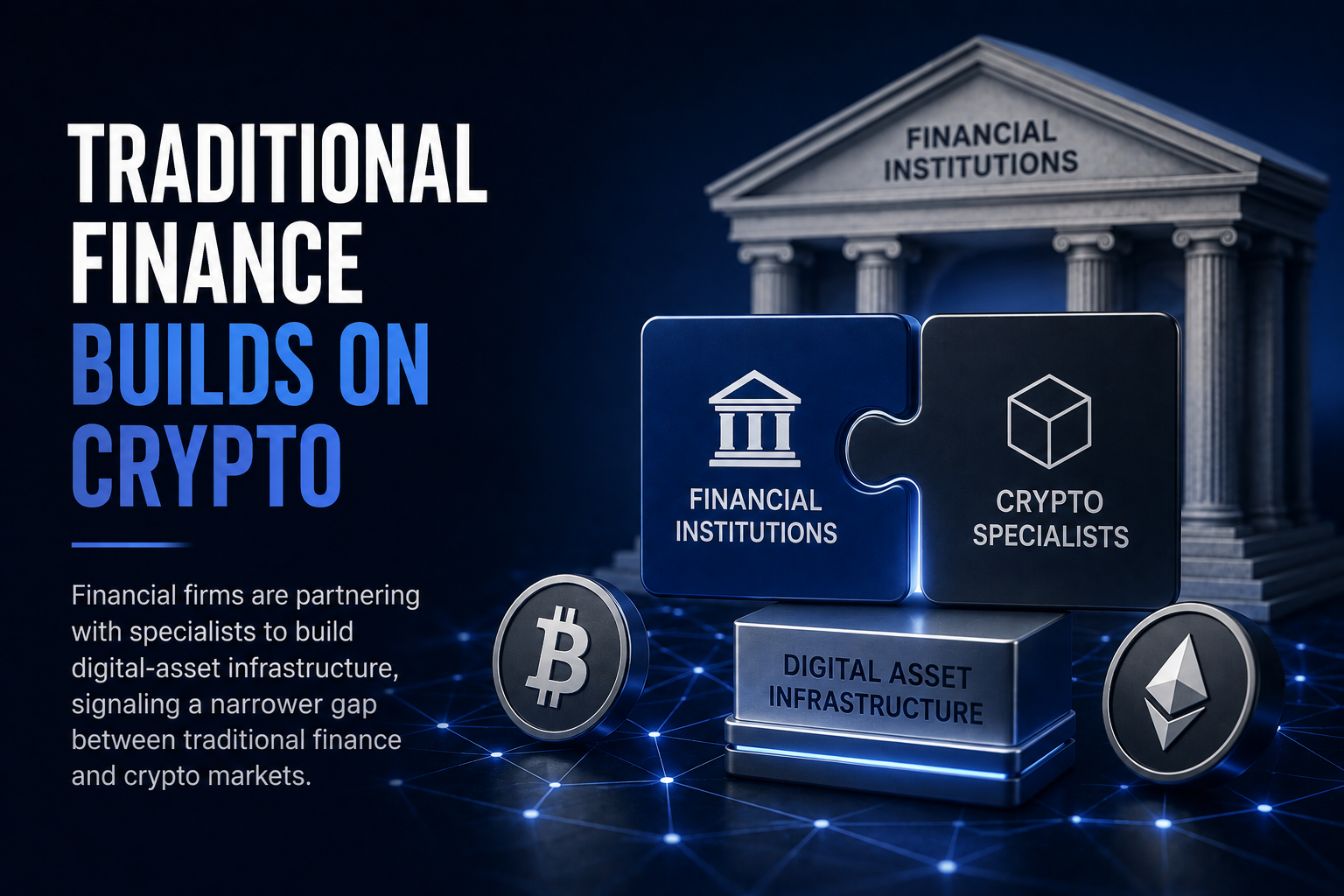
The long-running divide between bitcoin advocates and the banking industry appears to be narrowing as major financial firms move deeper into digital assets, according to CoinDesk.
Rather than framing the market as a contest between crypto natives and Wall Street incumbents, the latest wave of activity suggests a more practical approach: traditional finance firms are working with specialists to build the infrastructure needed for digital assets. That shift is blurring the line between conventional finance and the crypto sector, turning what once looked like competing camps into a more integrated market structure.
For years, the phrase “long bitcoin, short the bankers” captured a view that crypto and traditional finance were fundamentally at odds. The current environment looks different. As CoinDesk reported, TradFi giants are now embracing digital assets, and the focus is increasingly on partnership rather than opposition. The result is a sector that is less defined by ideological separation and more by operational convergence.
The development matters for market participants because infrastructure often determines how quickly new asset classes gain adoption. Custody, settlement, trading, and other back-end services tend to shape whether institutions are willing to participate at scale. By collaborating with specialized providers, financial firms can add digital-asset capabilities without having to build every component from scratch.
The broad takeaway is not that the two worlds have merged completely, but that the distinction between them is becoming less useful as a market label. Digital assets are no longer being treated solely as an outside challenge to the financial system. Instead, they are increasingly being incorporated into it, with large firms helping define how the sector develops.
The extent of that shift will depend on execution and regulation, which remain outside the scope of the source material. Still, the direction described by CoinDesk is clear: the industry is moving toward a unified financial landscape in which traditional institutions and crypto specialists operate more closely together.
As this trend develops, market attention is likely to remain on the buildout of core infrastructure and the role of partnerships in bringing digital assets further into mainstream finance.