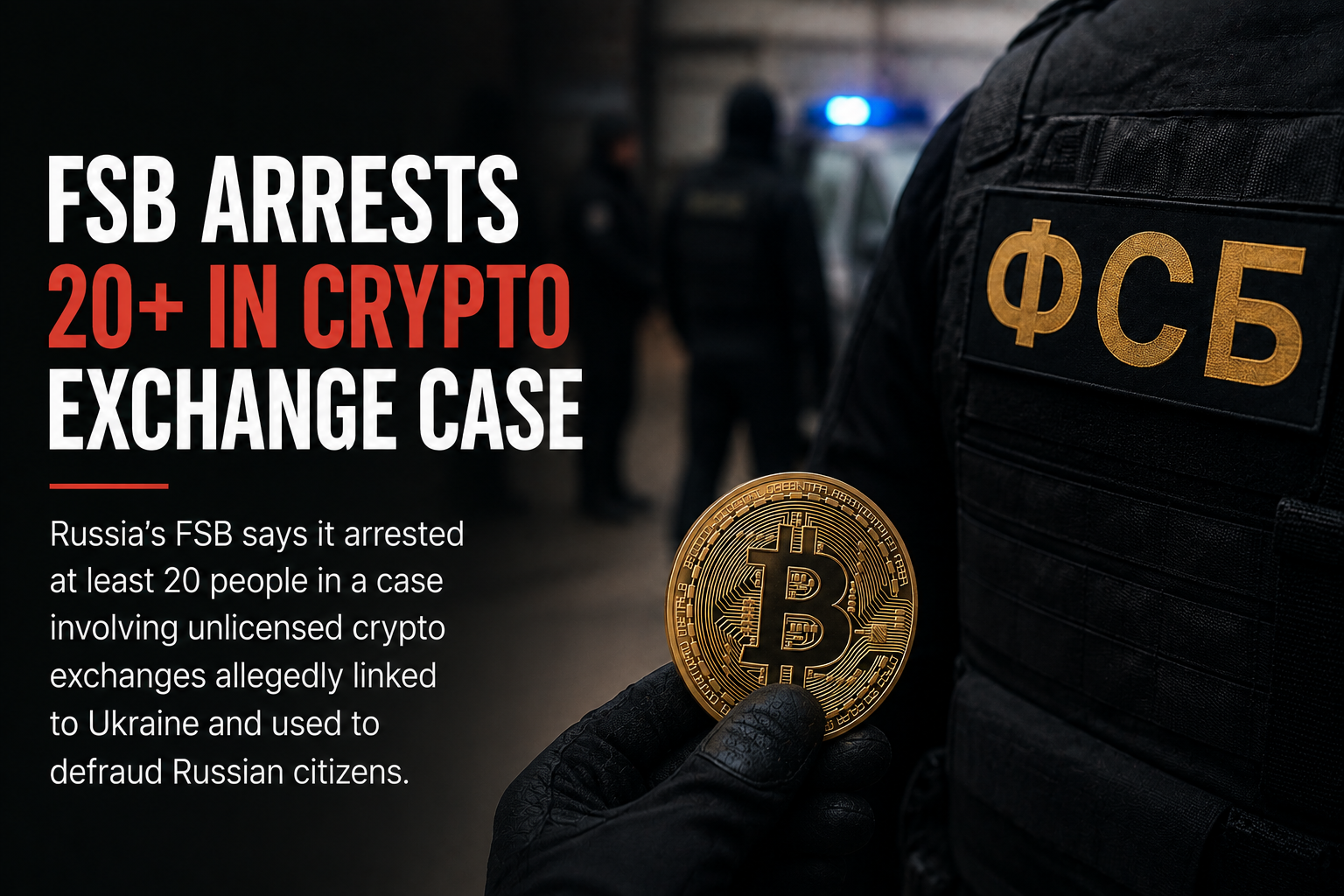
Russia said it has moved against a network of unlicensed crypto exchanges that authorities allege were tied to Ukraine, in a case that underscores the regulatory and geopolitical scrutiny facing digital asset activity in the country.
According to the Federal Security Service, or FSB, at least 20 people were arrested in connection with what it described as a ring that scammed an undetermined number of Russian citizens. The agency said the operation involved unlicensed exchanges, but it did not provide further details on how the service worked, the scale of the alleged fraud, or the specific role of any crypto assets.
The claims are significant because they combine two themes that have repeatedly shaped Russia’s stance on crypto: concerns about illicit financial activity and the government’s broader political framing of cross-border threats. At this stage, however, the public details appear limited. Based on the information released, it is not clear how the exchanges were operated, whether any customer funds were recovered, or how investigators connected the group to Ukraine.
The FSB’s statement suggests the case is being treated primarily as a law-enforcement matter rather than a market issue, but developments of this kind can still affect sentiment around Russian crypto usage. Unlicensed exchanges have long occupied a gray zone in many jurisdictions, particularly where formal banking access is constrained and users may rely on informal channels to move value.
Russia has taken a mixed approach to digital assets over time, tolerating some crypto activity while keeping a close eye on services that operate outside official oversight. Actions against unlicensed platforms can therefore be read both as enforcement against alleged fraud and as an effort to tighten control over financial flows.
For now, the case appears to center on arrests and accusations rather than a broader policy change. The FSB said the group targeted Russian citizens, but it did not specify the number of victims or the amount allegedly stolen. CoinDesk reported the development based on the agency’s disclosure.
Because the available information is limited, any market impact is likely to depend on whether investigators release additional details, identify larger service providers, or announce asset seizures. Until then, the episode mainly adds to the backdrop of regulatory uncertainty around crypto exchange activity in Russia.