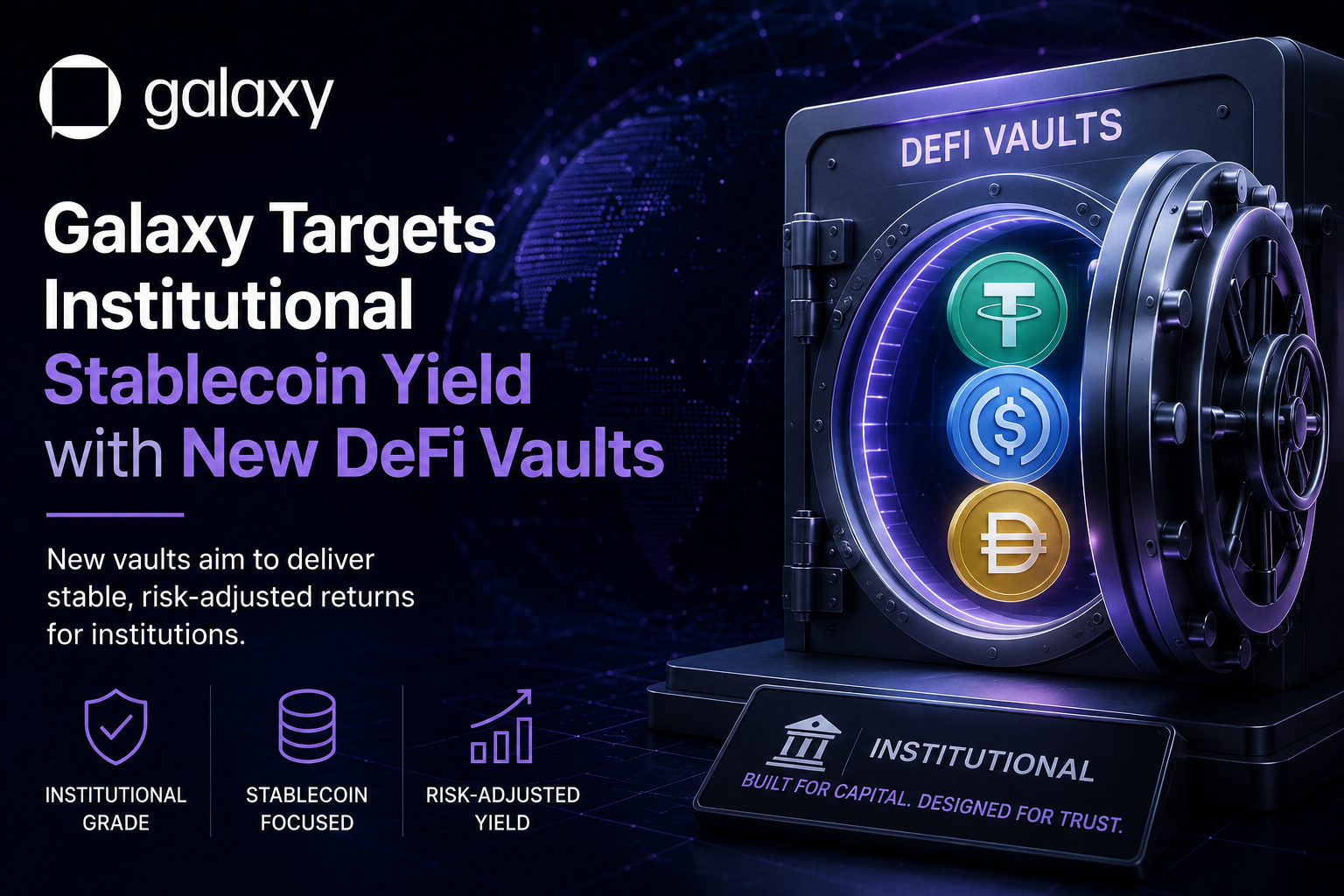
Galaxy has launched a new DeFi product aimed at institutional stablecoin yield, adding to a growing list of crypto firms trying to package onchain strategies for professional investors.
The crypto financial services company introduced Galaxy Curator, a platform built on Morpho, the decentralized lending protocol. According to CoinDesk, the service is designed to give Fireblocks’ 2,400 institutional clients access to onchain yield strategies.
The launch reflects continued interest from institutions in stablecoin-denominated returns, even as the market remains selective about risk, counterparty exposure and operational controls. By placing the product within Fireblocks’ client network, Galaxy appears to be targeting firms that already use institutional-grade custody and infrastructure rather than retail users.
Details on the specific vault structures, supported stablecoins and target yields were not disclosed in the source material. It is also unclear from the available information how Galaxy will manage risk parameters or whether participation will be limited by jurisdiction or client type. Those details may prove important for institutions evaluating DeFi-based yield products.
Morpho has emerged as one of the more closely watched DeFi lending venues, and Galaxy’s decision to build on the protocol suggests a continued push to connect traditional market infrastructure with onchain lending markets. The move also highlights how firms are trying to make decentralized finance more accessible to institutions without requiring direct interaction with protocol interfaces.
For Galaxy, the product extends its broader push in crypto financial services into a segment where demand has been persistent but cautious. Institutions have shown ongoing interest in stablecoin yield opportunities, especially when those opportunities are delivered through familiar service providers and custody platforms.
Still, the launch should be viewed as an infrastructure development rather than a signal of guaranteed demand. As with any DeFi-based product, actual adoption will likely depend on client risk appetite, compliance considerations and the performance of the underlying markets.
CoinDesk reported the launch on July 16, 2026.