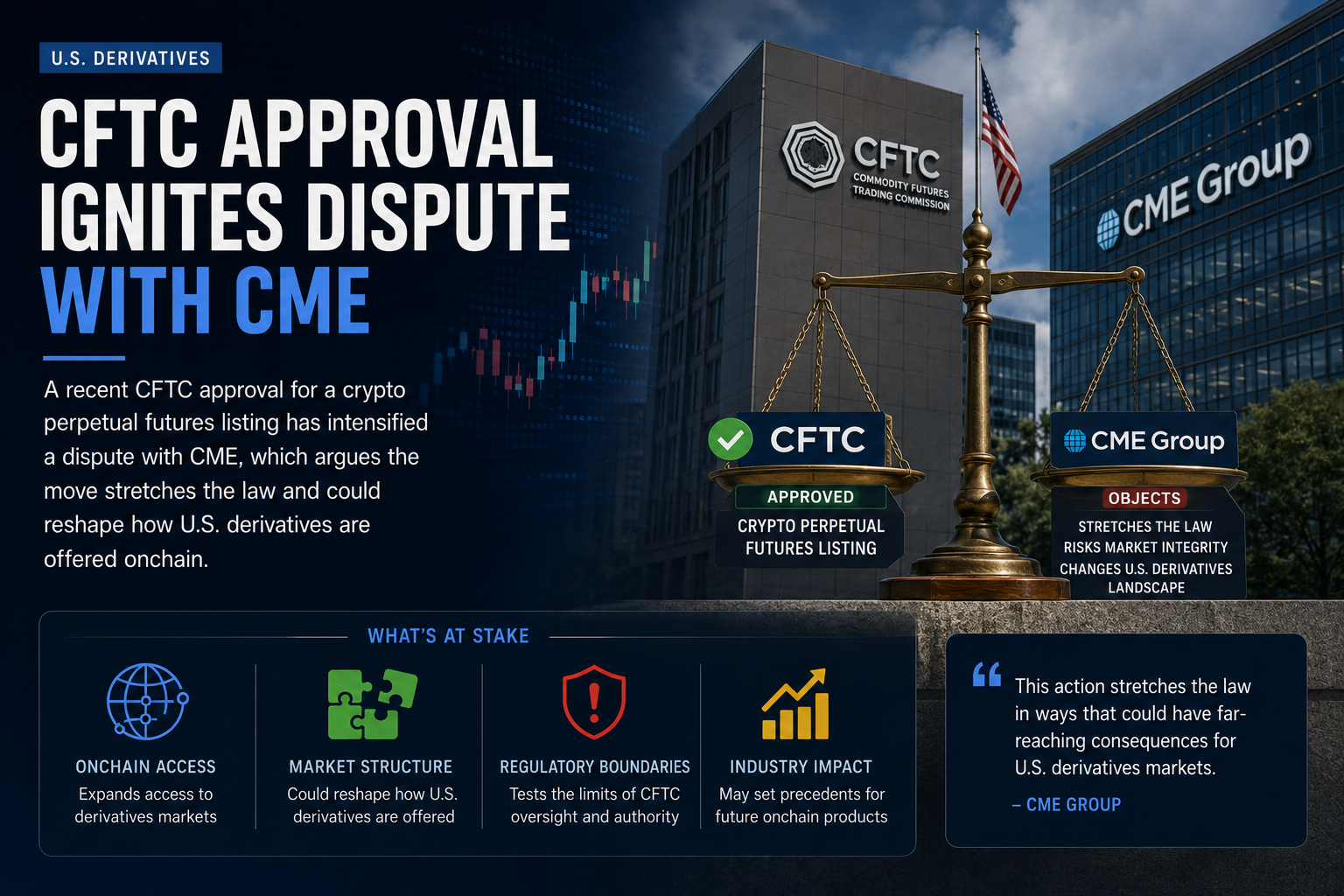
The U.S. crypto derivatives market is facing a new regulatory test after the Commodity Futures Trading Commission approved its first crypto perpetual futures listing, a move that has drawn pushback from CME Group, the country’s largest derivatives exchange.
According to CoinDesk, the approval came only weeks ago and effectively opened the door to onchain perpetual futures in the U.S. That decision has set off a broader debate over whether such products fit within the current legal framework, or whether they represent a departure from it.
Perpetual futures, or “perps,” are a staple of offshore crypto trading because they allow speculation without an expiration date. Their structure has made them one of the most heavily traded products in digital assets, but also one of the most closely scrutinized by regulators. The CFTC’s move marks an important step for firms looking to bring more of that activity into a U.S.-regulated venue.
CME, however, is challenging the direction of travel. The exchange appears to view the approval as inconsistent with the law, arguing that the product category could divert activity away from established derivatives rules and the traditional structure of regulated futures markets. The dispute underscores a familiar tension in U.S. crypto policy: how to accommodate new market designs without undermining the framework that already governs derivatives trading.
The outcome matters beyond a single product listing. If onchain perpetual futures gain traction under U.S. oversight, they could become a template for additional crypto derivatives offerings. If regulators or incumbents succeed in narrowing the path, the market may remain split between offshore perps and more conventional U.S. futures contracts.
For now, the details remain limited to the regulatory approval and CME’s opposition. But the broader significance is clear. The fight is not just about one listing. It is about who gets to define the boundary between innovation and compliance in the next phase of crypto market structure.
CoinDesk reported the dispute as part of a wider policy discussion around crypto derivatives and the CFTC’s role in overseeing them. The agency’s approval may have started the process, but the legal and commercial debate is only beginning.