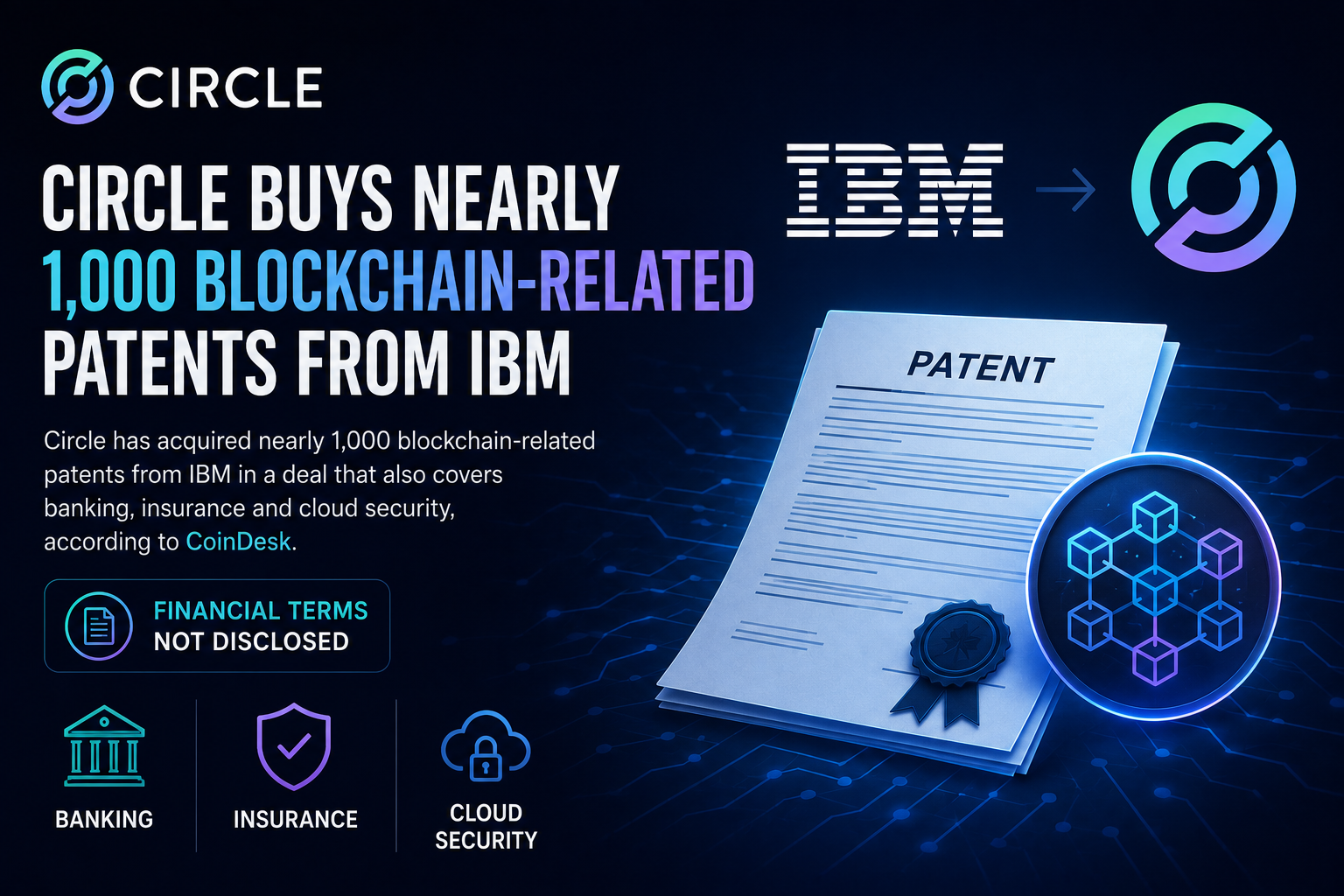
Circle has acquired nearly 1,000 blockchain patents from IBM, adding a broad intellectual property portfolio that spans blockchain technology, banking, insurance and cloud security, according to CoinDesk.
The companies did not disclose financial terms of the transaction, leaving the scale of the deal unclear. Still, the purchase suggests Circle is continuing to invest in technical and legal infrastructure around digital assets and payments, rather than focusing only on product expansion.
The patent package is notable for its range. While blockchain is the most directly relevant category, the inclusion of banking, insurance and cloud security points to a wider set of enterprise and financial technology applications. That breadth may give Circle more room to build or defend future products across regulated financial services and infrastructure.
IBM has long maintained one of the larger patent portfolios in the technology sector, and sales of intellectual property can reflect shifting priorities around commercialization and strategic focus. For Circle, the acquisition could strengthen its position in areas where blockchain intersects with traditional finance, though the company has not publicly detailed any specific plans tied to the patents.
The move comes as blockchain firms continue to compete not only on product distribution and partnerships, but also on ownership of foundational technology. Patent holdings can matter in that environment by shaping negotiations, licensing opportunities and defensive positioning, even when they do not translate immediately into consumer-facing products.
Because the terms were not disclosed, it is not possible to assess the valuation of the portfolio or determine how material the purchase is relative to Circle’s broader strategy. The available information only shows that the company has expanded its patent holdings with a sizable IBM portfolio.
CoinDesk reported the transaction on July 27, 2026. No further details were provided in the source about integration plans, licensing arrangements or whether any related business units were involved.