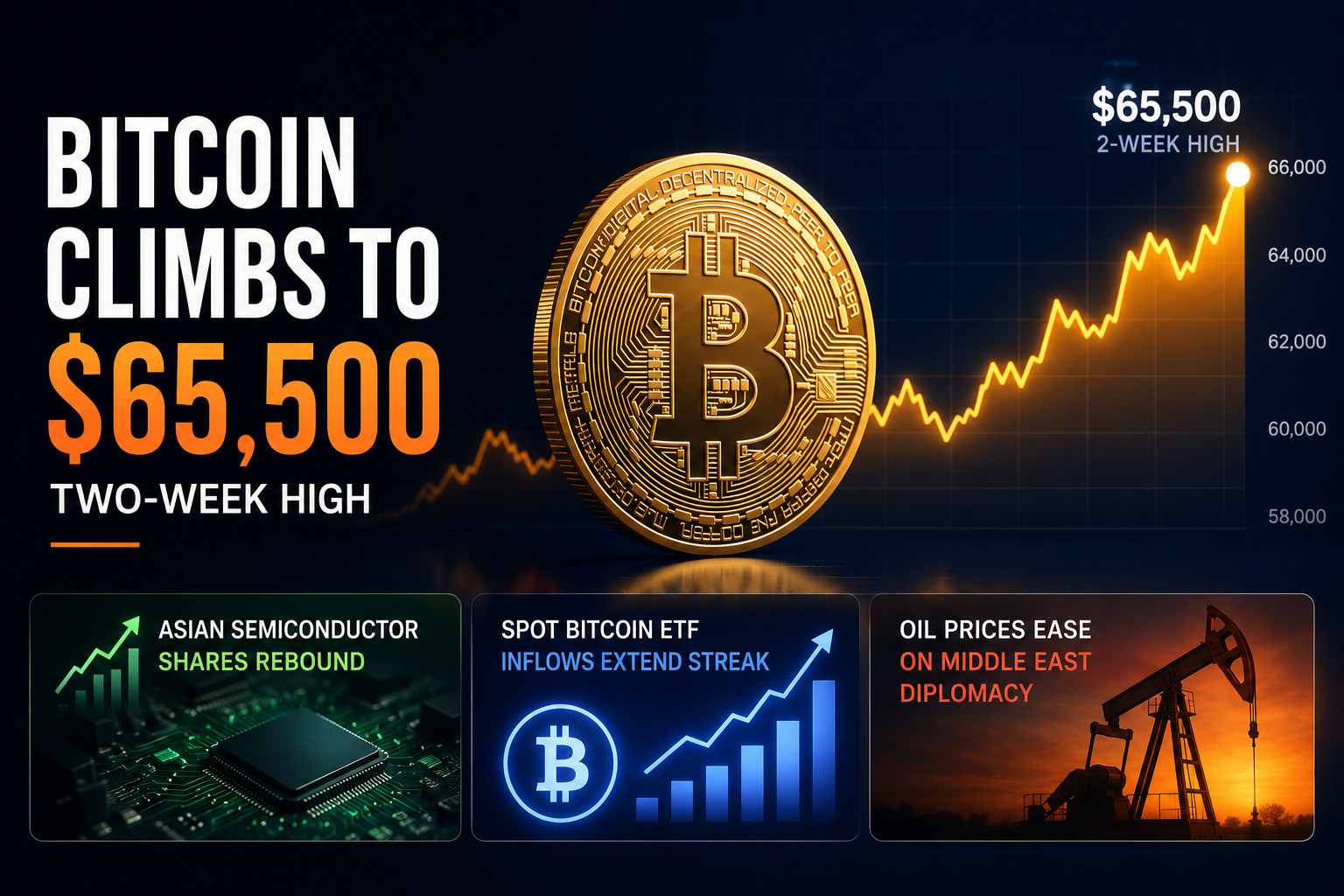
Bitcoin climbed to a two-week high near $65,500 as a broader risk rally returned to markets, helped by a rebound in Asian semiconductor shares and a continued run of inflows into U.S. spot Bitcoin ETFs, according to CoinDesk. The move came as oil prices pulled back on signs of progress in Middle East diplomacy, easing one of the recent sources of macro pressure.
The recovery in chip-related stocks appeared to support a more constructive tone across risk assets. Semiconductors have been a key driver of equity sentiment this year, and their bounce helped turn the so-called chip trade back into a tailwind after recent weakness. Bitcoin often tracks shifts in broader risk appetite, particularly when technology shares regain momentum.
ETF flows also remained supportive. CoinDesk reported that a five-day streak of inflows into Bitcoin exchange-traded funds had surpassed $600 million, adding another source of demand for the largest cryptocurrency. While daily flow data can be volatile, sustained inflows have become an important market signal for traders watching institutional participation.
At the same time, oil’s decline may have eased some pressure on global markets. Lower crude prices can help reduce concerns about inflation and interest rates, though the relationship is not always straightforward. In this case, the pullback appeared tied to diplomacy in the Middle East, a development that may have tempered the geopolitical risk premium in energy markets.
Bitcoin’s move to the highest level in about two weeks suggests that recent selling pressure has eased, at least for now. Still, the market backdrop remains mixed, and the extent to which the latest advance can hold will likely depend on whether tech shares keep their footing and ETF demand persists.
As with other short-term moves in crypto, the drivers are partly macro and partly flow-based, and the next leg may depend more on broader market conditions than on digital-asset-specific news alone. The CoinDesk report did not indicate any single catalyst behind the move beyond the combination of stronger chip stocks, steady ETF inflows and softer oil prices.