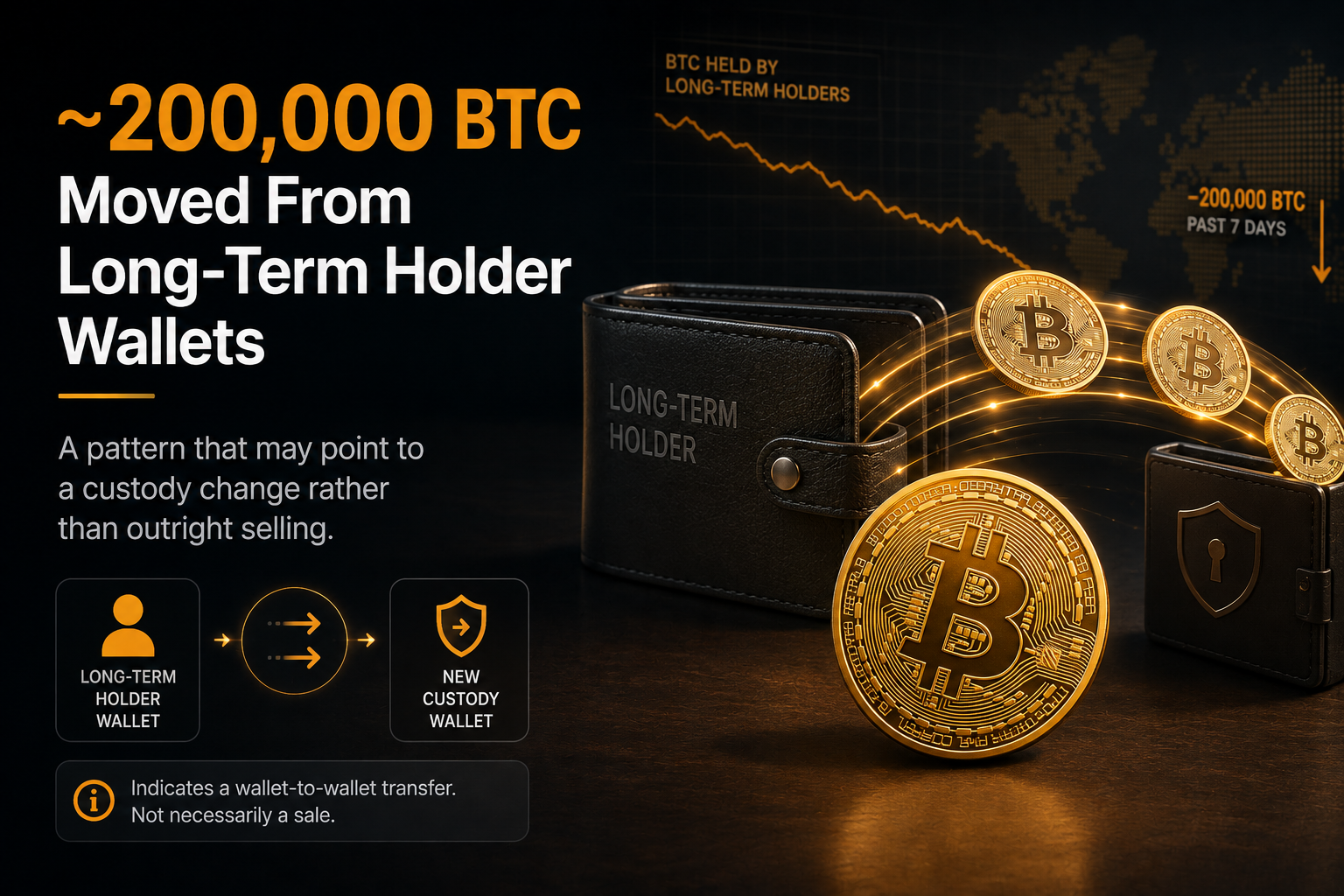
Bitcoin wallets associated with long-term holders have seen a sizable wave of activity in recent days, with roughly 210,000 bitcoin moving onchain, according to CoinDesk. The flow has prompted market attention because the transactions appear to involve older wallets, a pattern that can sometimes reflect a change in custody rather than a simple decision to sell.
The movement comes amid what CoinDesk described as fallout tied to Coldcard, though the available metadata does not provide further detail on the nature of that event. Based on the onchain pattern alone, the activity has been interpreted cautiously. Large transfers from long-dormant wallets can be difficult to read in real time, especially when there is no immediate confirmation of whether coins are being redistributed, consolidated or prepared for sale.
That distinction matters for market participants because the same onchain data can imply very different outcomes. Coins leaving older wallets may signal that holders are changing storage arrangements, moving assets to new addresses or shifting custody providers. In other cases, the same type of movement can precede market distribution. The current data, however, does not support a firm conclusion on direction or intent.
The reported scale is notable. Roughly 200,000 bitcoin moving in a week is a large amount by any standard, and transfers from long-term holder wallets tend to draw scrutiny because those coins have often remained inactive through multiple market cycles. Still, the metadata available for this brief points only to the movement itself and the possibility that custody, not selling pressure, is the primary explanation.
For traders and analysts, the key question is whether the coins ultimately remain within the broader ecosystem or begin appearing in venues associated with liquidation. Without that confirmation, the safest reading is that the onchain activity reflects a significant reshuffling of older bitcoin holdings, with the market still waiting for clearer signs about the motive.
Source: CoinDesk.